DATA CENTRE
The physical layer is the next AI frontier

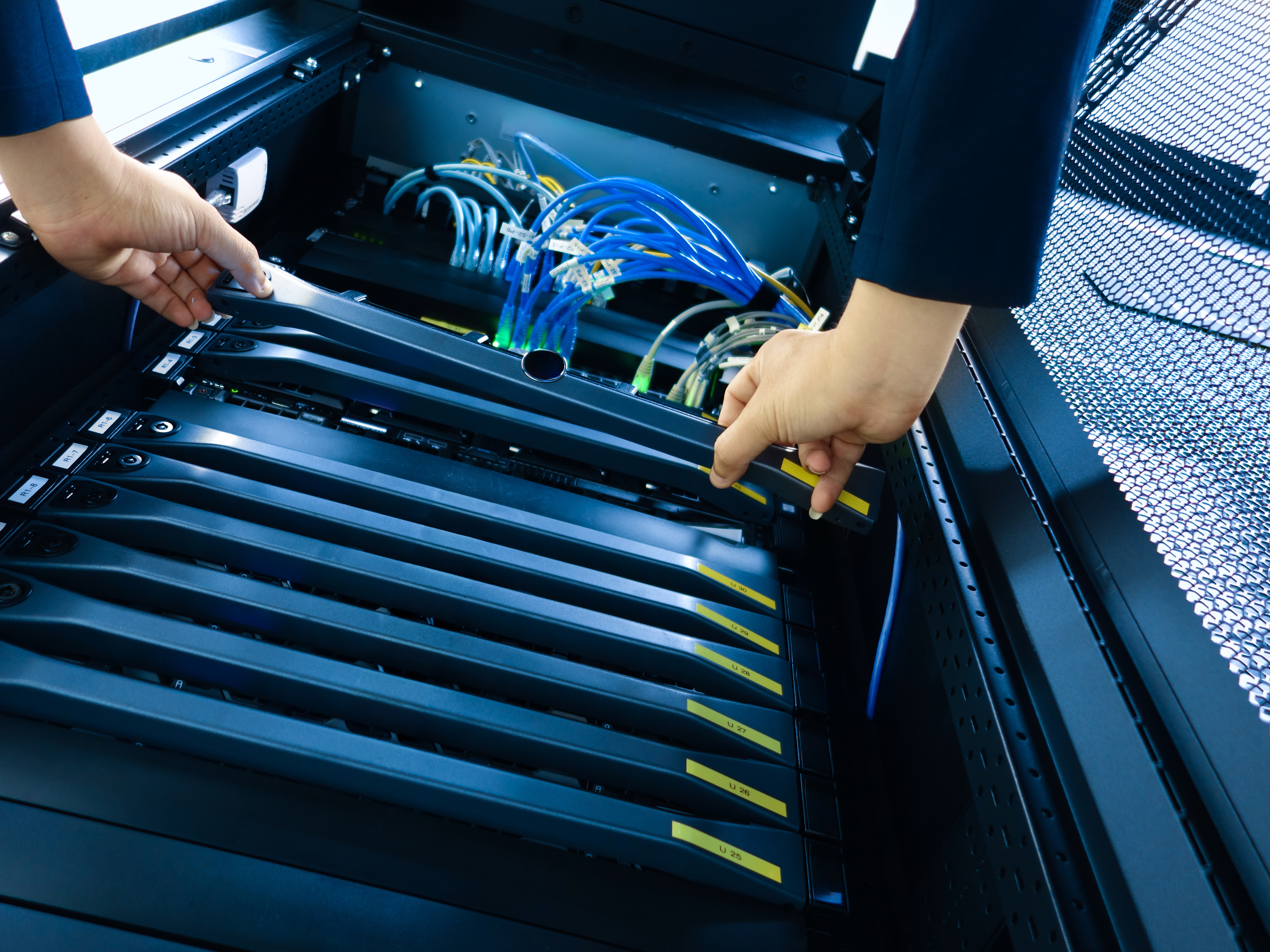
Everyone's talking about AI agents and model capabilities. But as these workloads move from demos into production, the real bottleneck is becoming clear - it's the physical infrastructure underneath.
The AI conversation has, understandably, been dominated by models - parameter counts, benchmark scores, reasoning capabilities. And with the rise of autonomous AI platforms, attention has shifted further toward workflow orchestration and what these systems can actually do. That's all legitimate. But there's a layer of the stack that hasn't been getting enough attention, and it's starting to show.
When AI agents move from controlled demos into continuous production environments, the demands placed on physical infrastructure change significantly. These aren't occasional API calls. They're persistent, high-concurrency workloads that require real-time coordination across thousands of simultaneous interactions. At that scale, the tolerances are completely different. A few microseconds of latency or a negligible rate of packet loss - manageable in isolation - can compound into serious performance degradation when you're running thousands of agents in parallel.
The network requirement has shifted. It's no longer about basic connectivity. It's about sustained, low-latency, error-free transmission - and the physical infrastructure has to be built accordingly.
3 areas where infrastructure has to catch up
POWER & COOLING
AI server racks regularly exceed 100 kW now. That's not a future projection - it's the current reality in many modern deployments. Traditional air-cooled architectures simply weren't designed for this, and liquid cooling has moved from a niche consideration to a standard requirement in new facilities.
But liquid cooling isn't just a thermal upgrade. It fundamentally changes rack design. You need more compact cabling, higher-density connectors, and carefully optimised routing paths. Physical space inside the cabinet has become a genuine strategic resource, not an afterthought.
CABLING AS A CAPITAL DECISION
Most AI data centres today are deploying at 400G. The roadmap from there goes to 800G and then 1.6T and for infrastructure expected to last several years, that progression matters enormously.
THE UPGRADE PATH QUESTION
- Buying cables optimised only for today's speeds risks expensive rip-and-replace cycles as bandwidth demands increase.
- Pre-terminated, modular fibre systems can support multiple generations of speed upgrades without replacing underlying structured cabling.
- The right cabling decision now protects capital investment and reduces operational disruption during future transitions.
The bottom line: cabling decisions made during a facility build or refresh have a multi-year impact. It's worth treating them with the same rigour as compute and storage choices.
OPERATIONS AT SCALE
The scope of what needs to be managed has shifted dramatically. Modern AI clusters aren't measured in thousands of endpoints anymore - they're measured in millions. The traditional model of periodic inspection and reactive maintenance doesn't hold up at that magnitude.
Digital twin technology and AI-driven operations platforms are moving from "nice to have" into core infrastructure. The goal is predictive, real-time network management - catching issues before they become outages, rather than responding after the fact. For anyone managing large-scale deployments, this shift in operational model is probably already on your radar. If it isn't, it should be.
What this means in practice at Aginode
Our product development is directly aligned with these infrastructure shifts. Here's what that looks like concretely:
- DCmark SLIMFLEX fibre patch cords
Designed specifically for high-density AI racks - maximising available space and improving airflow where both are at a premium. - DCmark ENSPACE
Pre-terminated fibre system that optimises trunk utilisation and supports seamless migration from 400G to 800G and 1.6T - without replacing the underlying cabling. - Liquid-cooled AI environments
A dedicated solution portfolio in development, addressing the density and thermal requirements of the next generation of AI infrastructure.
The through-line across all of it is the same: connectivity infrastructure that doesn't become the limiting factor as AI workloads scale.
The bigger picture
Autonomous AI depends on software innovation - better models, smarter orchestration, more capable agents. That's not in question. But the reliable deployment of those systems at scale depends on whether the physical foundation can support them.
As the industry pushes forward on algorithmic capability, the resilience and adaptability of the physical layer will increasingly determine whether AI agents can successfully make the leap from development environments to sustained, production-grade deployment across industries.
The infrastructure conversation is catching up. The question for data centre managers and IT teams is whether their physical layer is ready for what's coming - or whether it becomes the ceiling.
Share this
About the author