DATA CENTRE
Designing data centre racks for density, airflow, and peace of mind

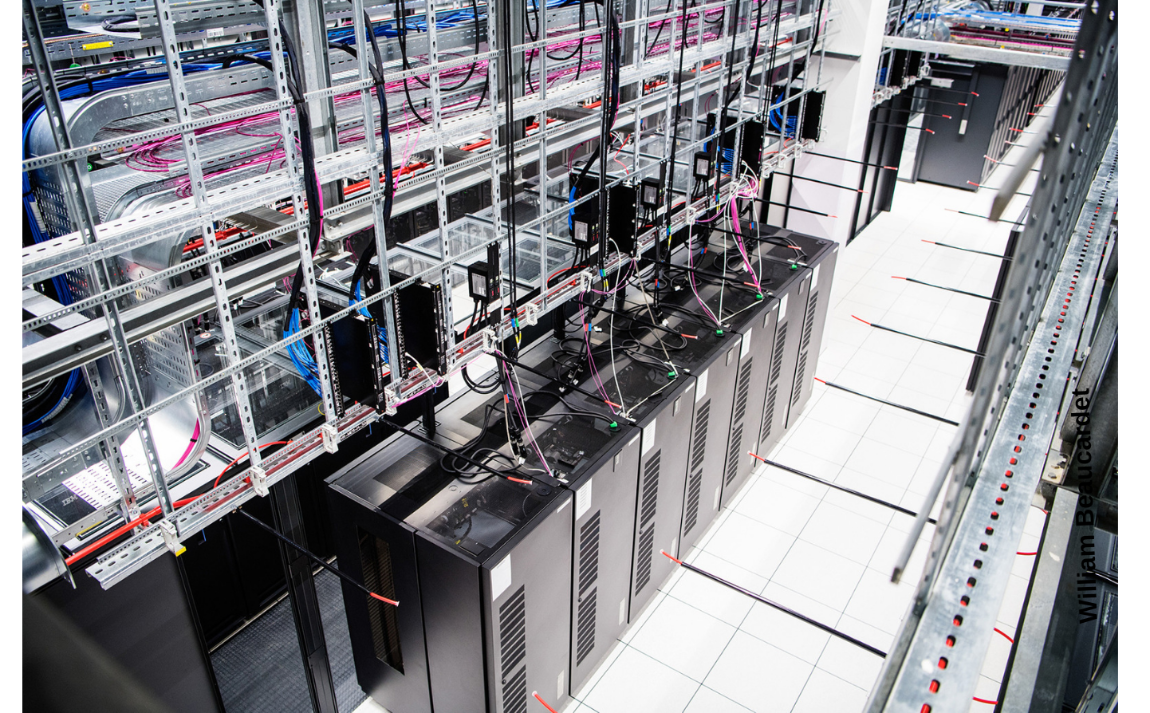
Modern data centres face unprecedented pressure from AI compute, high-speed fabrics, edge deployments, and growing sustainability constraints. The result: hotter racks, more fibre terminations, and faster rollouts - without more space to work with. This blog explores how smart rack design, airflow discipline, and cable management strategies can make density sustainable while preserving serviceability and operational calm.
Modern data centres are being reshaped by four converging forces. AI-class compute is driving rack power and heat densities higher than ever. Exploding traffic and optical interconnect needs are pushing rapid upgrades to 400G/800G networks, bringing far more fibre terminations to every rack. Workloads are shifting to the edge, where operators must deploy countless small, standardised, dense sites quickly. Meanwhile, real-estate shortages, sustainability requirements, and grid constraints are pushing operators to densify their existing footprints instead of expanding them.
The result: more ports, hotter racks, faster rollouts - without more floor space. Meeting these demands requires getting the physical layer right, and the rack plays a central role.
Rack solutions and cable management
The foundation of sustainable density is rack hardware that supports high port counts while remaining fully front-serviceable. Technicians should be able to work without disturbing neighbouring cords or equipment.
Key principles include:
- Use vertical and horizontal cable managers to guide structured routing.
- Keep overhead or underfloor pathways sized realistically for future fill.
- Prevent cable bulk from intruding into airflow paths.
- Respect minimum bend radii for fibre and copper.
- Separate power and data where possible.
- Provide slack storage designed not to obstruct cooling intakes.
Operational clarity is equally important. Standardise labelling, U-numbering, and patching practices across rows and support them with instrumentation, automated documentation, or AIM/DCIM integrations. This ensures port-level changes are detected, logged, and mirrored in work orders and tickets.
Hot-cold aisle discipline and containment
Rack temperatures are climbing. According to the Uptime Institute’s 2024 Global Data Center Survey, 7–9 kW racks continue to grow in share, but AI/HPC environments are already pushing beyond 30 kW - and this trend is accelerating. AFCOM’s 2024 State of the Data Center report shows average rack density rising to ~12 kW, up from ~8.5 kW the year before.
The first step to accommodating these loads is airflow discipline. Congested cabling or poor alignment leads to bypass air, recirculation, hotspots, and wasted energy.
Best practices include:
- Align equipment front-to-back consistently.
- Deliver supply air to cold aisles and return exhaust to hot aisles.
- Use full or partial containment (end-of-row doors, roof panels, blanking panels, brush grommets).
- Seal cable cutouts and gaps.
- Restrict perforated floor tiles or supply grilles to cold aisles only.
Many operators achieve early density gains simply by improving airflow and containment before adopting liquid cooling - though liquid solutions are increasingly common as loads climb.
Distances, clearances, and service access
Density is increasing not just in power but in connectivity. Shipments of 400G and 800G optical modules nearly quadrupled in 2024, and 51.2T/102.4T switch silicon is driving explosive growth in high-speed ports. AI servers amplify this further - often fanning out to 12+ Ethernet ports each, compared with ~5-6 for traditional x86 servers.
Connector technology is evolving too:
- VSFF duplex connectors (CS, SN, MDC) pack more ports per RU.
- Higher-fibre MPO formats, especially MPO-16, support SR8/DR8 applications efficiently.
But density without space creates risk. Insufficient manipulation room causes small-radius bends, microbends, and increased loss. Cramped racks slow MAC work, increase MTTR, and raise the risk of accidental disconnects.
Recommendations:
- Provide ~1.2 m (4 ft) of cold aisle clearance for people, doors, and tools.
- Allocate 0.6–1.0 m behind racks depending on equipment depth.
- Use sliding, lockable trays that bring work surfaces to the technician.
- Move passive patching overhead when density becomes extreme.
- Maintain headroom for ladder racks and trays.
- Ensure clean egress areas for containment and safety.
Local code, seismic requirements, and accessibility rules may increase these minimums.
Perforation and heat dissipation
Cabinet doors must breathe. Too little perforation increases pressure drop, forcing server fans to spin faster—raising inlet temperatures, energy usage, and noise while worsening PUE. Back pressure also encourages recirculation through unsealed gaps, creating hotspots that ultimately limit how dense a rack can be.
Guidelines:
- Specify front and rear doors with 70–80% open area for air-cooled environments.
- Populate unused rack spaces with blanking panels.
- Consider rear-door heat exchangers, chimneys, or enhanced containment if modelling shows benefit.
Operators often try to solve airflow issues by propping doors open—but this undermines containment, cooling efficiency, and physical security. Proper perforation eliminates the need for such workarounds.
Bringing it all together
High-density compute and networking don’t have to come at the expense of serviceability or stability. When racks, pathways, containment, clearances, and cabinet choices are designed as a single, integrated system, operators can safely increase ports per RU and rack power while keeping day-two operations predictable.
Key recommendations when specifying or upgrading racks:
- Fibre density: Choose 1U panels supporting ≥144 LC (UHD) or 96 LC (HD) with independent sliding, lockable trays.
- Cable routing: Use overhead patch frames (≥4U) to move dense patching out of active racks; ensure guides preserve bend radius and provide strain relief.
- Automation: Use Automated Infrastructure Management (AIM) integrated with DCIM/ITSM for real-time port-level visibility, work orders, audits, and alerts.
- Copper: Where needed, use 1U 48-port Cat6A panels with integrated rear cable management, angled fronts, and hinged shutters.
- Rack envelopes: Ensure racks are available in 19” and ETSI formats, widths from 600–900 mm, and multiple heights and door types to align with containment strategy and room layout.
When all of these elements work together, operators gain the density they need, the airflow performance they depend on, and the operational peace of mind their teams require.
Share this
About the author